In the world of marketing and branding, where companies vie for attention and consumer loyalty, the concept of the Brand Identity Prism is a powerful tool. Developed by Jean-Noël Kapferer, the Brand Identity Prism is like a map that helps us understand all the important parts that make up what a brand is all about.
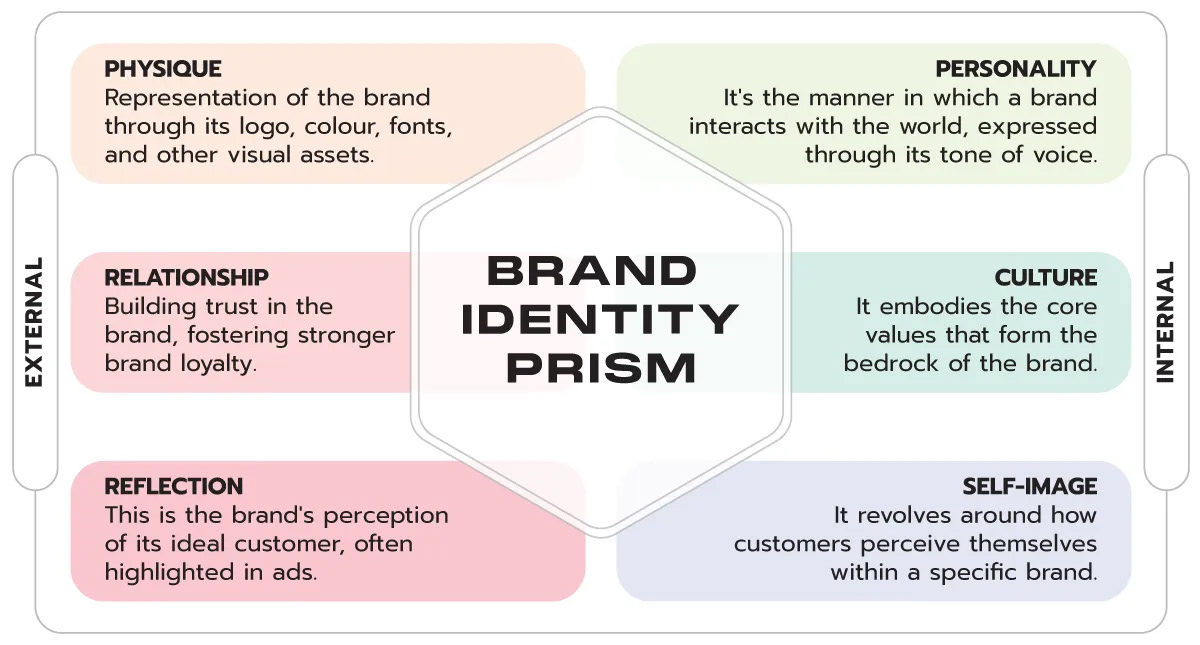
At its core, the Brand Identity Prism comprises of six facets, each representing a fundamental aspect that contributes to a brand’s persona and perception.
Physique: This facet represents the visual aspects of a brand, such as its logo, design, and other visual elements. It’s the outward appearance that creates immediate recognition.
Personality: Brands, akin to individuals, exhibit personalities. This facet defines the brand’s character, values, and traits, allowing consumers to connect emotionally.
Culture: Just as societies have cultures, brands cultivate their own. This facet encapsulates the beliefs, principles, and shared behaviors within the brand’s ecosystem.
Relationship: Brands build relationships with consumers, and this facet delves into the nature of that connection. It encompasses how brands interact, engage, and relate to their audience.
Reflection: Reflecting the customers’ self-image, this facet addresses how consumers perceive themselves when associated with a particular brand. It taps into aspirations and identity.
Self-image: Lastly, this facet denotes the brand’s own perception of its ideal consumers, shaping strategies and communication to resonate with this envisioned audience.
The Prism’s Significance
The Brand Identity Prism serves as a compass for brand managers and marketers, guiding them through the complexities of brand building and communication. By understanding and harnessing each facet, companies can craft a cohesive and compelling brand identity that resonates with their target audience.
The Brand Identity Prism serves as a compass for brand managers and marketers, guiding them through the complexities of brand building and communication. By understanding and harnessing each facet, companies can craft a cohesive and compelling brand identity that resonates with their target audience.
Crafting a Strong Brand Identity: By meticulously defining each facet, companies can create a coherent and consistent brand identity. From designing visuals that reflect the brand’s ethos to shaping communications that embody its personality, every aspect is aligned.
Building Emotional Connections: Brands that resonate emotionally tend to build stronger connections with their audience. The prism aids in crafting a personality that speaks directly to consumers, fostering lasting emotional bonds.
Differentiation and Positioning: Understanding a brand’s culture and personality helps it stand out in a crowded market. By leveraging these facets effectively, brands can carve a unique position, distinguishing themselves from competitors.
Targeted Communication Strategies: With insights into how customers perceive themselves within the brand (Reflection), marketers can tailor messaging and campaigns that align with consumers’ aspirations, thus striking a chord with their target audience.
Application Across Industries
The versatility of the Brand Identity Prism extends across various industries and businesses. From luxury brands cultivating an aura of exclusivity to tech companies striving for innovation, each can leverage the prism’s facets to craft a distinct brand identity.
The versatility of the Brand Identity Prism extends across various industries and businesses. From luxury brands cultivating an aura of exclusivity to tech companies striving for innovation, each can leverage the prism’s facets to craft a distinct brand identity.
In the ever-evolving landscape of marketing, the Brand Identity Prism stands as a beacon, guiding brands towards clarity, consistency, and resonance. By dissecting a brand’s identity into six essential facets, this framework empowers companies to shape perceptions, foster connections, and carve a lasting place in the hearts and minds of their consumers.